
The Short Answer
Pull the emergency release cord only when you need to move the door by hand because the opener itself has failed — a power outage, a dead motor, or a car trapped inside and no time to wait. Do not pull it if the door won't move on its own, if a spring has snapped, or if the door looks crooked or off its track. In those cases, the cord disconnects the one thing that's keeping a very heavy door under control, and it can drop or jump its tracks the moment you pull it.
What the Cord Actually Does
That red handle hanging from a short rope is connected to the trolley that rides along the opener's rail. Pulling it releases the trolley from the drive mechanism, which disconnects the door from the motor entirely. Once it's disconnected, the door moves purely on its springs and rollers — the opener has no say in it anymore. That's exactly what you want during a power outage. It's the wrong thing to disconnect if the springs, which normally counterbalance the door's weight, aren't doing their job.
When Pulling It Is the Right Call
- Power outage and you need the car out or in before the lights come back.
- Opener motor failure — you hear a hum or click but the door doesn't move, and everything else (springs, rollers, track) looks normal.
- Remote or keypad stopped responding and you've already ruled out dead batteries.
In all of these cases, the door itself is mechanically sound. Disconnecting the opener just lets you operate it manually, the way garage doors worked for decades before openers existed.
When Pulling It Makes Things Worse
This is the part that causes real damage, and occasionally real injury, so it's worth being specific.
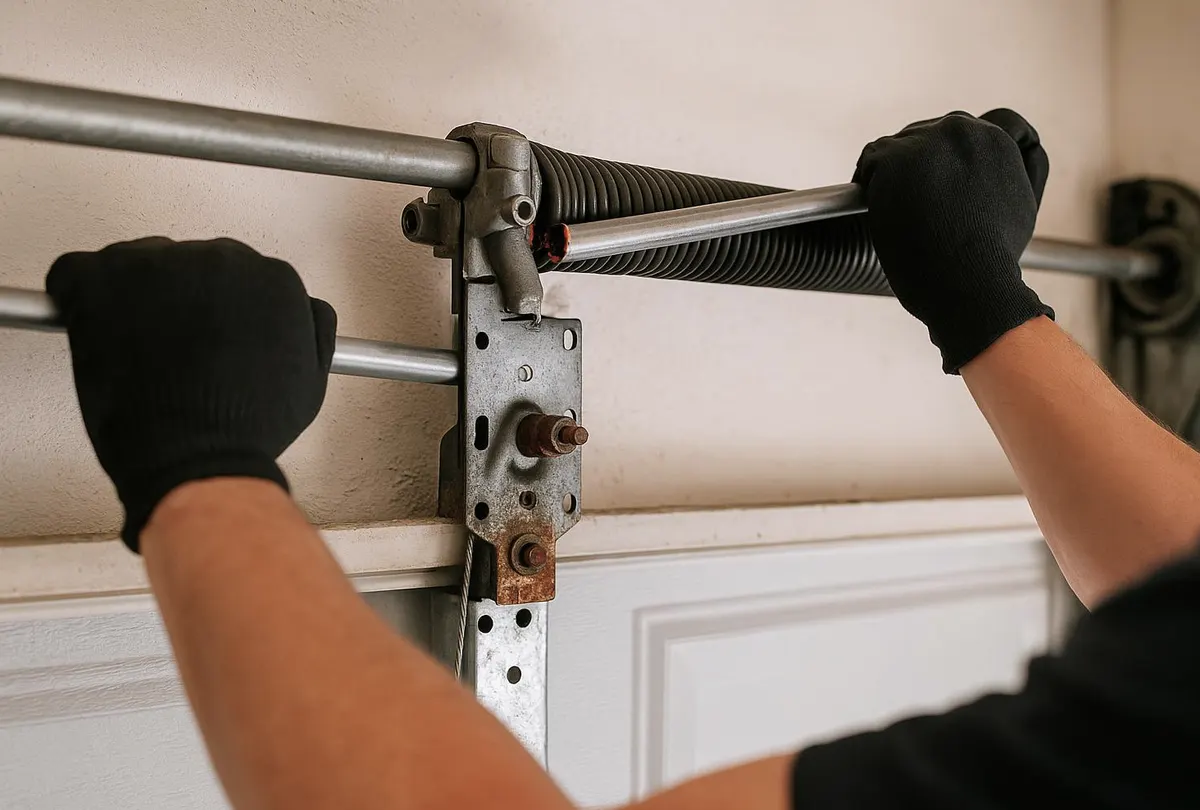
A broken spring plus a pulled release cord is the worst combination. Springs counterbalance the door's full weight — on a standard double door that's often 150 to 400 pounds. The opener's motor is not built to lift that weight alone; it relies on the spring doing most of the work. If a spring has already failed and you pull the release cord while the door is up, there is nothing left holding the door except gravity. It can come down hard and fast, with no opener resistance to slow it. That's a crushing hazard for anything — or anyone — underneath, and it can bend panels or snap cables on the way down.
A door that's already off its track is the second danger zone. If rollers have jumped the track (common after a bent track from a car bump, or after years of dust and grit building up in the rail), disconnecting the opener and trying to force the door manually can pull it further off, bend the track worse, or cause a panel to buckle.
Pulling the cord mid-cycle, while the opener motor is actively straining against a stuck door, can also cause the trolley to disengage incorrectly or strip the release mechanism itself, leaving you with a cord that no longer reconnects cleanly — meaning you've now broken the cord in addition to whatever caused the door to stick in the first place.
How to Reconnect It Correctly
When power returns or the opener is repaired, pull the cord toward the door (not sideways) to re-engage the trolley, then run the door through one full open-close cycle using the wall button, not the remote, so you can watch it travel smoothly. If the door doesn't automatically reconnect to the opener, some trolleys need the door moved by hand to the fully closed position first before the release arm will latch back into the carriage.
A Desert-Specific Note
Monsoon season brings the power blips that make this cord get used more than it otherwise would. Between that and the UV exposure that makes the cord's plastic housing brittle over a few summers, it's worth checking that the handle and rope aren't cracked or frayed before you actually need them in a hurry.
When to Call Scottsdale Garage Door
If you've pulled the cord and the door won't reconnect, feels unusually heavy, or looks crooked on the track, stop and call us rather than forcing it. Our garage door repair technicians can diagnose whether it's a spring, cable, or track issue before anything gets reconnected to power, and our spring replacement service restores the counterbalance the opener depends on so the release cord works the way it's supposed to again.
If your door isn't behaving the way it should, give Scottsdale Garage Door a call — we serve Scottsdale, Phoenix, Paradise Valley, Fountain Hills, Cave Creek, Carefree, Tempe, and Mesa, and we'll get it sorted safely.